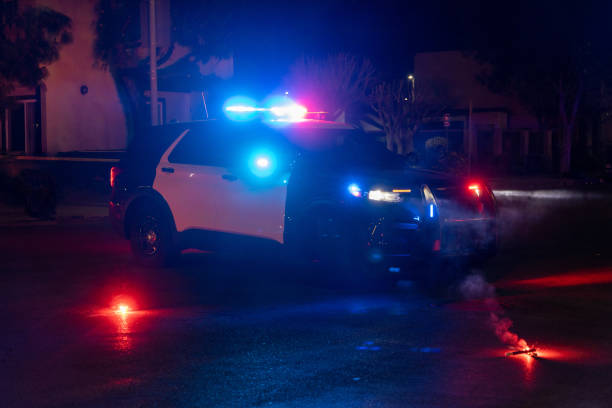
SAN MATEO, CA – A palpable wave of anxiety swept through the hills of San Mateo as Aragon High School was thrust into an emergency lockdown following reports of a possible shooting threat on campus. The incident, which unfolded rapidly during regular school hours, prompted a massive, coordinated response from San Mateo police officers, school administrators, and district emergency officials. For nearly two hours, students, faculty, and parents waited in tense uncertainty as law enforcement conducted a meticulous, room-by-room sweep of the sprawling campus.
By mid-afternoon, authorities delivered a cautious but collective sigh of relief: no active shooter was found, no weapons were recovered, and no injuries were reported. However, the psychological impact of the lockdown—and the lingering questions about the origin of the threat—continued to reverberate through the community as investigators worked to determine whether the report was a false alarm, a case of misinformation, or something more sinister.
The Initial Report: How the Lockdown Began
The sequence of events began at approximately 10:45 a.m. PST, when Aragon High School administrators received an unconfirmed but urgent report of a “potential safety concern involving a shooting.” According to a statement released later by the San Mateo-Foster City School District, the initial tip came through a combination of anonymous reporting channels and internal staff observations. While the exact nature of the threat has not been publicly detailed due to the ongoing investigation, sources familiar with the preliminary inquiry indicated that the report mentioned the possibility of an individual on campus with a firearm.
Within minutes, Aragon High School officials activated the school’s emergency operations plan. A pre-recorded announcement was broadcast over the campus’s internal speaker system, ordering an immediate lockdown. The distinctive, urgent tone of the announcement—referred to by staff as the “secure campus” code—sent students and teachers into action.
“We heard the announcement, and my teacher immediately locked the door, turned off the lights, and told us to move to the corner away from the windows,” said Marcus Chen, a junior at Aragon High School, speaking to a local news crew after being released. “Everyone’s phone started buzzing with texts from parents. That’s when the fear really set in. No one knew if it was real.”
Classroom doors were barricaded with desks and chairs. Students huddled in silence, some texting their families final goodbyes, while teachers posted “locked down” signs on classroom windows. Movement across the campus was frozen. The school’s sprawling athletic fields, parking lots, and corridors — usually bustling with activity — became eerily deserted.
Swift Response from San Mateo Police
The San Mateo Police Department (SMPD) received the first alert from school officials at 10:52 a.m. Dispatchers immediately upgraded the response, mobilizing not only patrol units but also officers from the department’s Special Response Team. Within seven minutes, the first officers arrived on scene, establishing a perimeter around the campus at 900 Alameda de las Pulgas.
Police Chief Susan Manheimer later addressed the media in a brief press conference near the school’s main gate. “Upon receiving the report of a potential shooting threat at Aragon High School, our officers followed established active threat protocols,” Chief Manheimer said. “We treat every such report with the highest level of urgency. There is no such thing as ‘overreacting’ when student and staff lives are potentially at stake.”
Armed officers, some in tactical gear, formed small teams and began a systematic sweep of the school’s main building, science wing, library, gymnasium, and performing arts center. Meanwhile, other officers fanned out across the surrounding San Mateo neighborhood, checking nearby streets, parks, and businesses for any suspicious activity or persons.
A San Mateo Police Department drone unit was also deployed to provide aerial surveillance, allowing commanders to monitor the campus grounds in real-time. No unauthorized individuals were observed entering or leaving the building during the initial phase of the lockdown.
Inside the Lockdown: Student and Teacher Accounts
For those inside Aragon High School, the minutes stretched into what felt like hours. Sarah Lambert, a history teacher at the school for 12 years, described the experience as “calmly terrifying.”
“You train for this. You do the drills. But when the announcement is real, your heart pounds differently,” Lambert said. “My students were incredible. Some were crying silently. A few were hyperventilating. But they followed every instruction. We pushed the bookshelf against the door. I told them to silence their phones. And then we waited.”
In the school’s cafeteria, where nearly 200 students had been during the lunch shift, staff quickly herded students into a rear storage kitchen and locked the heavy metal doors. Javier Morales, a senior, said the chaos was immediate. “People were running, dropping trays. One of the cafeteria workers yelled, ‘Get down, get down!’ We all just scrambled. It felt like a movie, but the fear was real.”
Several students reported receiving text messages from friends who claimed to have heard “loud bangs” — though police later confirmed those sounds were likely doors slamming or furniture being moved, not gunfire. The power of suggestion, amplified by social media, contributed to a swirl of rumors that briefly included claims of “multiple shooters” and “victims down,” all of which were ultimately debunked by authorities.
The Sweep and All-Clear: No Evidence of an Active Shooter
By 12:15 p.m., the San Mateo Police Department announced that the initial sweep of Aragon High School had been completed. The findings were stark but reassuring: no active shooter, no firearm recovered, no shell casings, no physical injuries. Officers checked every classroom, closet, restroom, and utility access point. They also reviewed security camera footage from the school’s network of interior and exterior cameras.
“At no point did our investigation uncover evidence that a shooting occurred on campus or that an individual was actively wielding a weapon inside or outside the school,” Chief Manheimer stated. “We have no confirmation that any shots were fired.”
However, police emphasized that the investigation is far from closed. Detectives are now focused on tracing the origin of the initial report. According to an SMPD spokesperson, investigators are looking into several possibilities:
1. A hoax or swatting call – False reports of school shootings have become a nationwide epidemic, often originating from anonymous online services or even foreign actors.
2. Misinterpreted information – A student or staff member may have seen something innocuous (e.g., a prop, a toy, a cell phone in a waistband) and reported it in good faith as a weapon.
3. A specific, credible threat that did not materialize – Investigators have not ruled out the possibility that an individual intended harm but either fled before police arrived or never actually entered the campus.
No arrests have been made, and San Mateo police have not identified any person of interest at this time. Authorities are asking anyone with information, including screenshots of social media threats or direct messages, to contact the SMPD tip line.
Official Statements and Praise for Protocol
Dr. Lisa Davies, Superintendent of the San Mateo Union High School District, issued a written statement late this afternoon. “I want to express my profound gratitude to the San Mateo Police Department for their swift, professional, and thorough response. I also want to commend the staff and students of Aragon High School. Their adherence to lockdown procedures—remaining silent, staying out of sight, and securing their doors—undoubtedly prevented panic and allowed law enforcement to work efficiently.”
Aragon High School Principal Brent Barnes also spoke to parents via a recorded phone message. “Our emergency systems worked as designed today. I know this was a frightening experience for our students and for all of you at home. We are arranging for crisis counselors to be available tomorrow for any student or staff member who needs support.”
The San Mateo Police Department and the school district have announced that they will conduct a joint after-action review within the next 10 days to assess response times, communication gaps, and any lessons learned.
Parental Reaction and Communication
For parents, the ordeal was agonizing. The district’s emergency notification system sent out a generic alert at 10:58 a.m. stating: “Aragon High School is under lockdown. Please do not come to campus. Further updates will follow.” But for the next 75 minutes, information was sparse.
Dozens of parents gathered at the police perimeter tape near the intersection of Alameda de las Pulgas and Hacienda Street, clutching phones and exchanging worried glances. Emily Tran, whose daughter is a sophomore, broke down in tears when she saw police with rifles. “I drove here as fast as I could. They wouldn’t let me through. All I could think was, ‘What if she’s hurt and I can’t get to her?’”
Some parents criticized the district for not providing more frequent updates. However, emergency management experts note that during active law enforcement operations, detailed updates can compromise officer safety or spread unverified information. By 12:30 p.m., parents began receiving reunification instructions: students would be released on a staggered schedule from the Aragon High School gymnasium, with IDs required for pickup.
Broader Context: The Epidemic of School Threat Reports
Today’s lockdown at Aragon High School is far from an isolated incident. According to the K-12 School Shooting Database, there were over 300 recorded incidents of gunfire on school grounds in the United States in 2023 alone. Even more common are non-shooting threats: in the first two months of 2025, California schools reported more than 45 lockdowns triggered by alleged threats, the vast majority of which turned out to be unfounded.
The San Mateo area has seen a series of similar scares in recent years. In 2022, Burlingame High School was locked down after a student reported seeing a man with a rifle; the object turned out to be a tripod. In 2024, Hillsdale High School received a swatting call that prompted a two-hour shelter-in-place. Each incident drains police resources, traumatizes students, and costs thousands of dollars in overtime and emergency response.
Dr. Rachel Okonkwo, a clinical psychologist specializing in adolescent trauma, said that even false alarms have real consequences. “Students who experience lockdowns often report symptoms similar to post-traumatic stress: hypervigilance, difficulty sleeping, intrusive thoughts about violence, and reluctance to return to school. Schools must provide follow-up mental health support, not just physical safety.”
Ongoing Investigation and What Comes Next
As of 5:00 p.m. PST, Aragon High School has resumed limited operations. After-school activities were canceled for the day, but the campus is expected to be fully open tomorrow, with additional police presence as a precaution.
The San Mateo Police Department has assigned three detectives to the case. They are currently:
· Reviewing anonymous tip line records from the past 72 hours.
· Analyzing metadata from the school’s emergency call system.
· Interviewing the individual(s) who originally reported the threat.
· Coordinating with the FBI and San Mateo County District Attorney’s Office in case the threat is determined to be a felony swatting incident.
If the source of the threat is identified, charges could include making a false report of an emergency (a misdemeanor) or, in more serious cases, making a criminal threat (a felony punishable by up to three years in state prison).
Chief Manheimer offered a final message to the community: “We understand how frightening today was for every family connected to Aragon High School. Please know that we will leave no stone unturned in investigating this incident. And to those who might consider making a hoax threat: we will find you, and you will be prosecuted to the fullest extent of the law.”
A Community’s Resilience
As dusk settled over San Mateo, the scene outside Aragon High School gradually returned to normal. Parents hugged their children tightly in the pickup line. Students shared stories of where they hid and what they texted. Some laughed nervously; others cried quietly in the passenger seats of minivans and SUVs.
Marcus Chen, the junior, summed up the mood as he walked to his family’s car. “I’m just glad everyone is safe. But I’m also angry. Someone’s careless words — or maybe someone’s deliberate lie — stole an entire day from us. We shouldn’t have to go to school feeling like we might not come home.”
For tonight, Aragon High School stands quiet, its halls empty, its lights still on. Tomorrow, students will return. Teachers will teach. Police will continue investigating. And the community will once again grapple with the unsettling reality of American school life in the 21st century: that even a false alarm can feel terrifyingly real.
Leave a Reply